For thirty years my work ended at handoff. This year I designed, built and launched seven products of my own. They are small, and they show what I can take from an idea to something people can install.
extravowel.com ↗- Shipped
- Seven products
- All live today
- Platforms
- Five
- macOS, iOS, watchOS, Chrome and web
- My role
- All of it
- Strategy, design, build and launch
- Fastest
- Five days
- Tiidy, from empty folder to launch
 WaalkiOS and watchOS
 TiidymacOS
 NewsferenceWeb
 PaakiOS
 PaaceChrome
 DiingmacOS
 ChiillmacOS
Why it matters
A designer who has only ever handed work over is guessing at what happens next. I wanted to stop guessing. So I took my own ideas the whole way: the brief, the design, the code, the store listing, the pricing and the support inbox.
The first, a packing list for iPhone, went from a Figma design on a Friday to a working app on the Sunday. Six more followed, each for a small problem of my own.
None of them is the point on its own. Together they are proof that I can scope a product, design it, get it built and put it in front of people.
The smaller the product, the more visible the design decisions.
What it shows
- 01
Product strategy
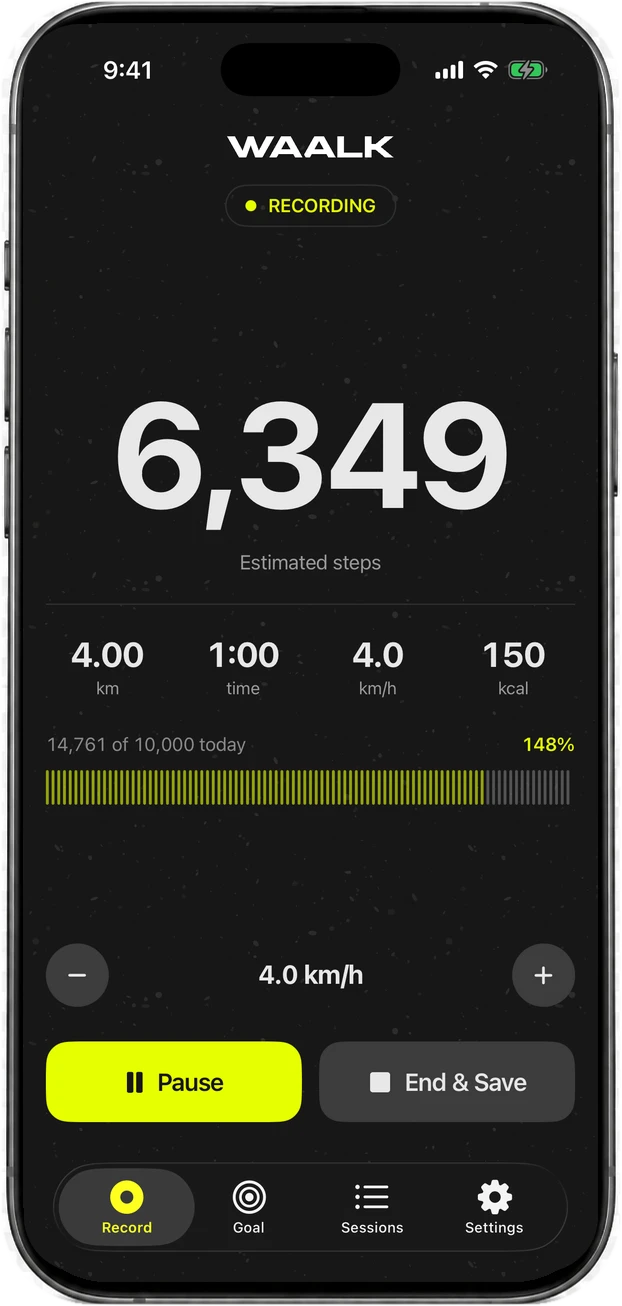
WaalkA walking pad, a watch, a phone and Apple Health sat on one desk and none of them talked. I scoped the product to one sentence: steps in Health, and rings that close.
- 02
Interaction design
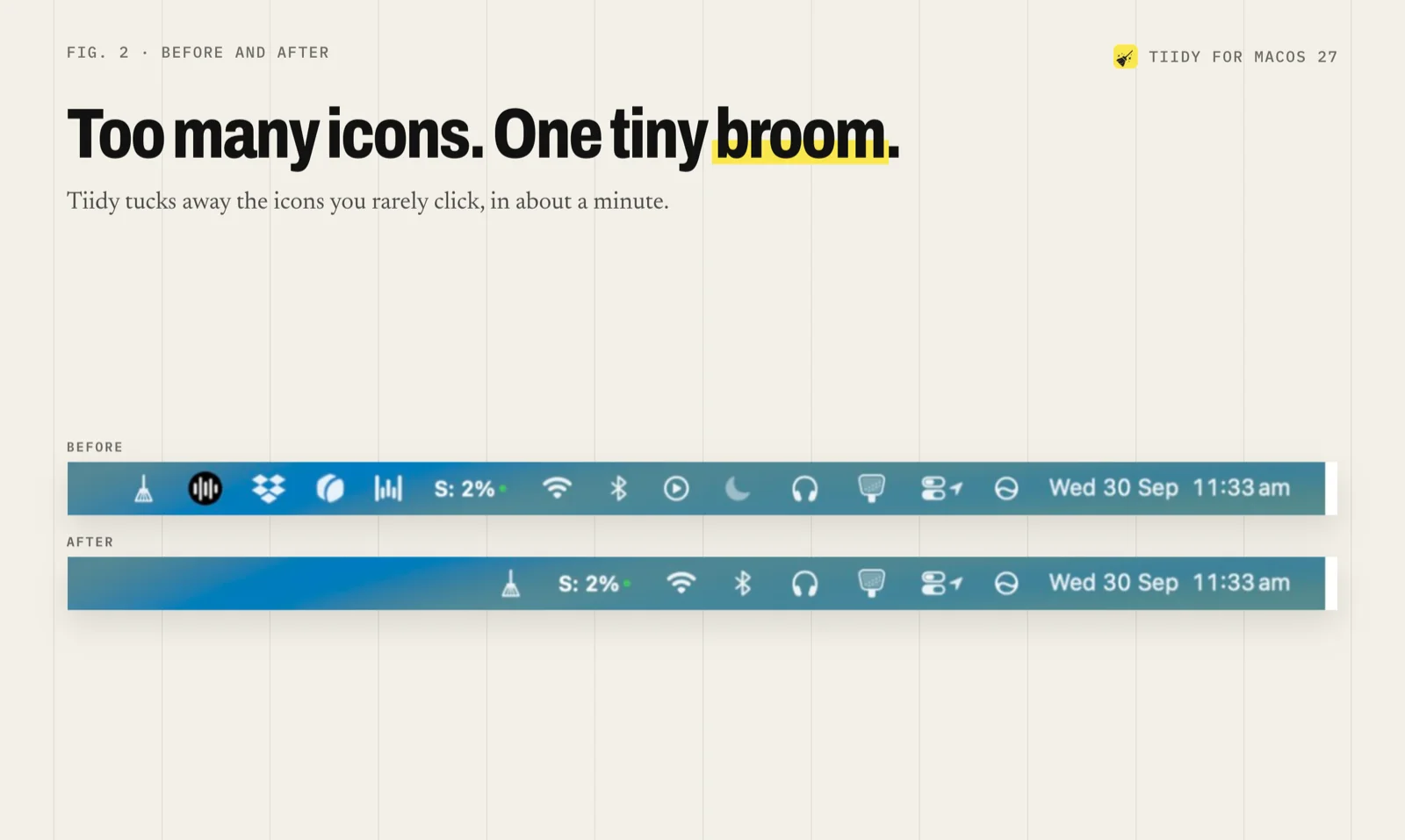
Tiidy and PaaceSorting fifteen menu bar icons in under a minute, one card at a time. A playback speed where a one-off change stays a one-off.
- 03
Data and AI products
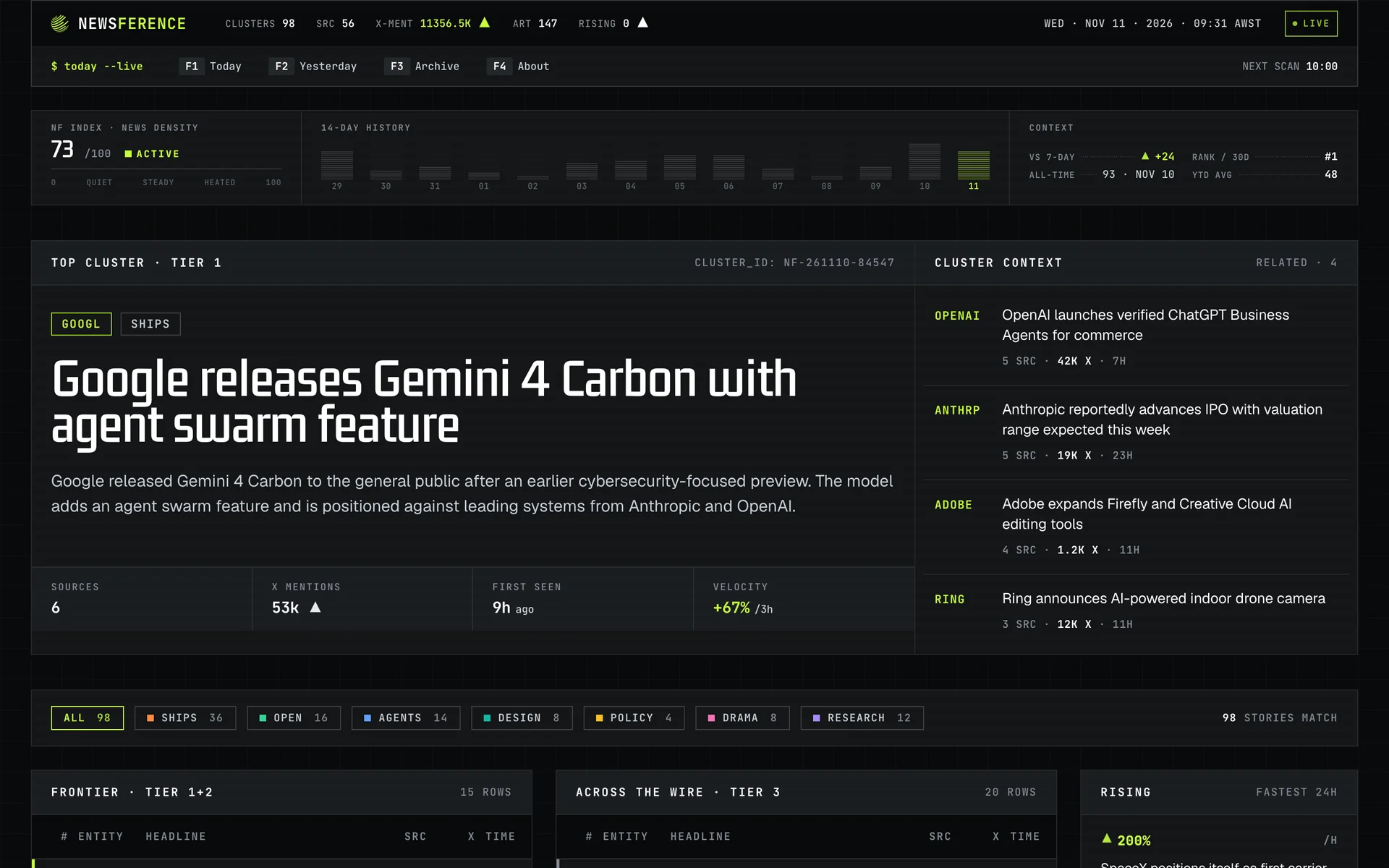
NewsferenceAbout fifty sources scanned every hour, coverage grouped by story, and the day summed up in one index from 0 to 100.
- 04
Hardware and APIs
Waalk, Diing and ChiillA walking pad over Bluetooth, Apple Health, Ring cameras and Sensibo air conditioners, each working through an interface I designed.
- 05
Brand and naming
Extra VowelOne naming idea across every product, with an icon and a launch page for each.
- 06
Pricing and launch
All sevenReleased through the App Store, the Chrome Web Store and direct download. Each is free or a single payment, with no subscriptions.
The decisions that mattered
Scope it to one job
I had spent about a hundred dollars on apps that almost did this. Some kept the data in their own silo, and some needed the phone unlocked the whole time. Waalk reads the pad, saves the walk to Health and drives the belt. I left out the feed, the streaks and the dashboard.
- Instead of
- A dashboard, a feed and streaks
- I chose
- One job, done with the phone locked
Cut the work you hand the user
Most menu bar tools hide your icons and then hand you a filing job: arrange them, keep arranging them, write rules for the exceptions. In Tiidy you make one choice per app, once. After that a tucked icon comes back on its own when it matters, then leaves again.
- Instead of
- Rules you build and maintain
- I chose
- One choice per app, then the app decides
Tune it until it feels true
Newsference sums up the day's AI news in one index. My first version read FRENZY every day. The second sat at exactly 50. The one that stuck uses a curve that eases off at both ends, so ordinary days move the number and a wild day still has room above it. Each change came from reading the day's headlines against the number, not from a spreadsheet.
- Instead of
- A score that was correct and felt wrong
- I chose
- A curve with room at both ends


01 / 04
What it means for a client
I still design for product teams, and I am not offering to replace your engineers. What changed is that I now know what each design decision costs to build, because I have built it.
Working prototypes
I can put a real, clickable build in front of users, not only a Figma file.
Honest scoping
I know which details are cheap to build and which are not.
Start to finish
For a small product, I can take it from the first sketch to launch.
Want a designer who can also ship?
I can design alongside your engineers, build a working first version, or do both.